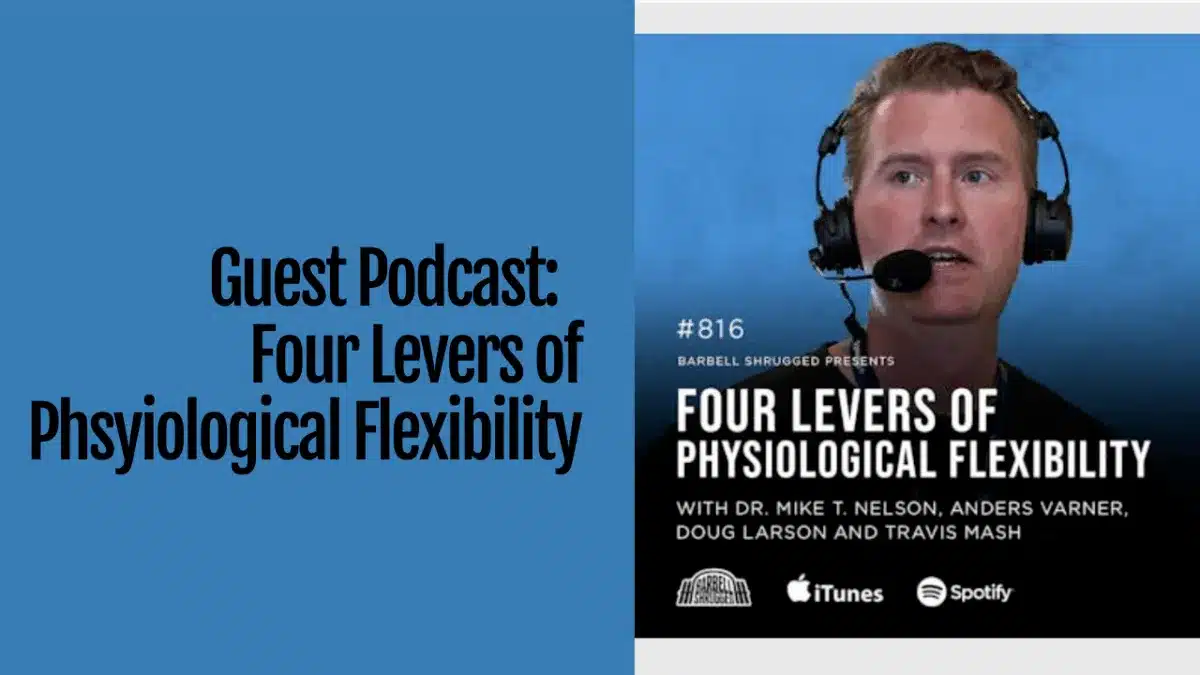



In this episode of Barbell Shrugged, I had the chance to return and talk about one of my favorite topics: physiological flexibility. Anders Varner and Doug Larson asked some great questions as we dug into the four pillars I use to help people build a more resilient and adaptable physiology—temperature regulation, pH balance, expanded fuel use, and breath work.
We broke down what it means to train your body to handle extremes: staying sharp through big temperature swings, managing pH shifts from diet and exercise, tapping into different fuel sources efficiently, and using breath control as a performance tool. These aren’t just abstract ideas—they translate directly into better performance, faster recovery, and stronger long-term health.
If you want to understand how to push your body further while making it more adaptable, this conversation is one you won’t want to miss.
Topics discussed
- 00:19 Understanding Physiological Flexibility
- 04:42 Diving into Temperature Adaptation
- 07:03 Heat and Cold Adaptation Strategies
- 09:30 Practical Applications and Personal Experiences
- 13:48 The Importance of Environmental Adaptation
- 25:20 Exploring pH and Buffering Systems
- 27:03 Sodium Bicarbonate: Benefits and Drawbacks
- 27:39 Personal Experimentation with Sodium Bicarbonate
- 28:41 Beta-Alanine vs. Sodium Bicarbonate
- 31:37 Physiological Flexibility and Performance
- 33:42 Cross Adaptation and Its Benefits
- 35:43 Ketones and Cognitive Benefits
- 41:31 Metabolic Flexibility and Performance
- 44:42 Breath Work and Stress Regulation
- 47:54 Balancing General Health and Specific Goals
- 53:29 Conclusion and Where to Find Us