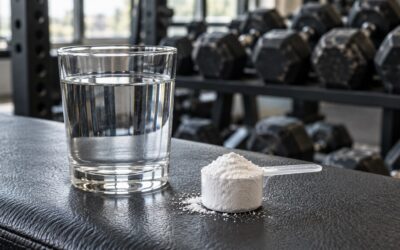
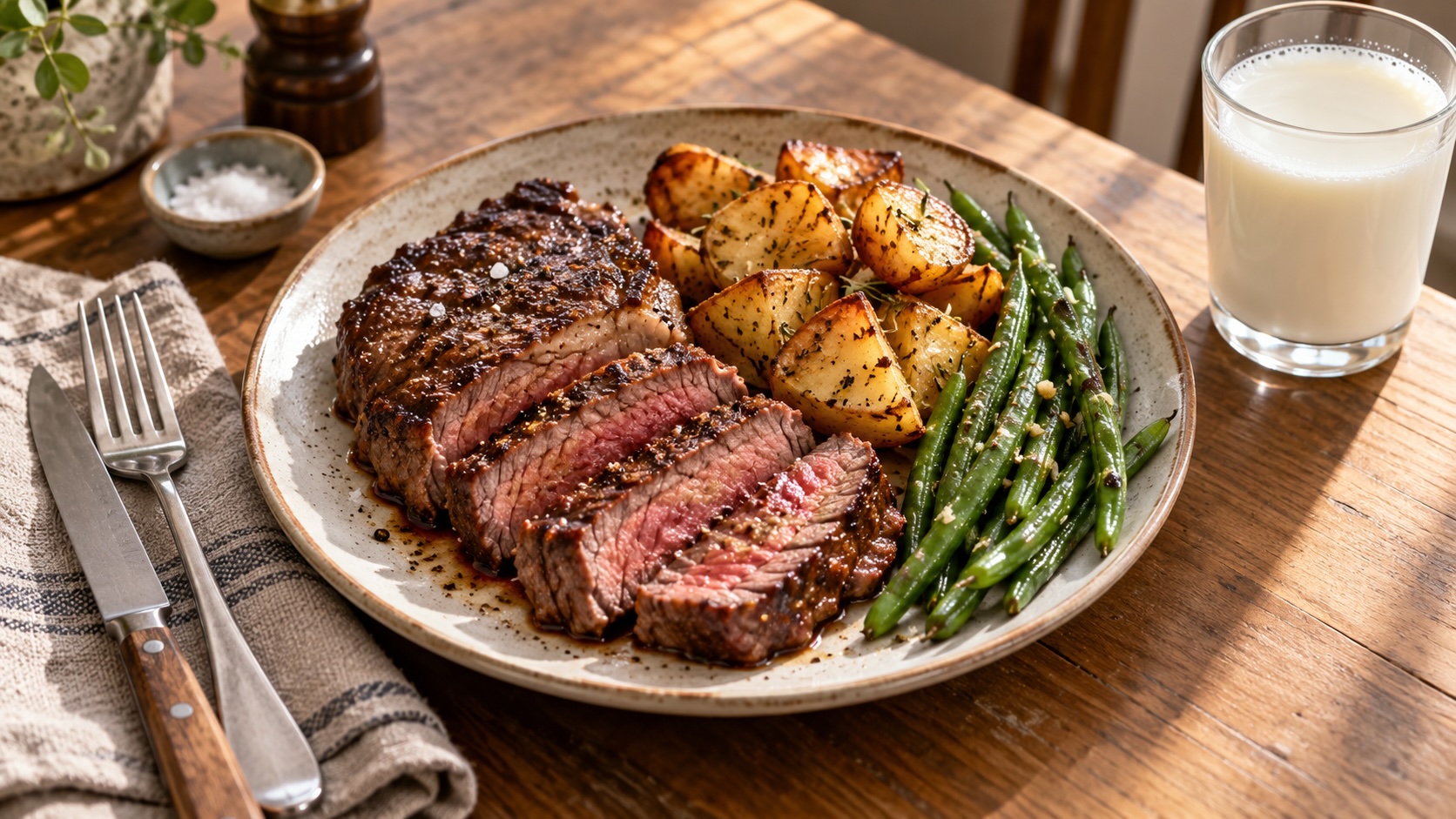
Imagine eating a giant steak.
Now imagine your body standing at the entrance to your muscles with a tiny clipboard:
“Sorry, pal. We can only use 30 grams of protein at once. The rest goes in the dumpster.”
This has been repeated gym lore for decades:
Your body can only absorb 20–30 grams of protein per meal.
Anything beyond that is supposedly “wasted.”
But if that were literally true, where does the other 70 grams go?
Does it evaporate?
Get stuffed into a biological storage closet?
Why don’t I have a steak-shaped deposit in the porcelain throne the next morning?
What Happens When You Eat 100 Grams of Protein?
A fascinating tracer study from the van Loon lab decided to follow the protein and find out.
Researchers gave healthy, recreationally active young men either 0, 25 or 100 grams of specially labeled milk protein after a demanding full-body lifting session.
Then they tracked those amino acids for 12 hours with blood samples, tracer infusions and repeated muscle biopsies.
What they found kicked the old 30-gram rule directly in the nut sack.
The 100-gram dose:
- Continued releasing amino acids into circulation for hours
- Produced a larger and longer muscle protein synthesis response than the 25-gram dose
- Resulted in an estimated 13 grams of dietary-protein-derived amino acids being incorporated into skeletal-muscle protein over 12 hours
- Produced a relatively small increase in amino acid oxidation compared with the increase in whole-body protein synthesis
In other words, your body does not slam the anabolic door shut at 30 grams. Read the original study by Trommelen and colleagues.
But absorbing protein and turning it into additional muscle are different things.
That estimated 13 grams represents incorporation into muscle protein, which includes ongoing remodeling. It does not mean you gained 13 grams of additional muscle protein after one shake. See the published scientific commentary.
What This Study Does Not Prove
Before you begin the new Anabolic Apocalypse 4,000 Diet and eat 100 grams of protein three times per day, there are some important caveats.
This was an acute study.
It involved young, healthy men after a demanding full-body workout.
And a larger short-term muscle protein synthesis response does not automatically guarantee more muscle six months later.
The study also did not compare one 100-gram serving with the same amount divided across several meals. It cannot tell us that those approaches produce identical results. Read the scientific commentary on the study’s interpretation.
More Flexibility With Your Protein Intake
The real benefit is much more practical:
You probably have more flexibility with protein distribution than the old 30-gram rule would have you believe.
You don’t need to sprint toward a shaker bottle every three hours because the anabolic clock is supposedly ticking.
You can use fewer, larger meals if that better fits your schedule, without assuming everything beyond 30 grams goes to waste.
Meeting your daily protein needs remains the priority. Meal distribution can still matter when you’re trying to optimize muscle growth.
Get the Free Protein Evidence Guide
I broke down the entire study, including what happened to the 100 grams, the connective-tissue findings, the autophagy question, the major limitations and how to apply it, in a free evidence guide:
Download Can You Use 100 Grams of Protein?
It contains the full scientific rabbit hole without requiring you to interpret isotope tracers or volunteer to have chunks of your quad removed in a laboratory.
Onward to gainZ,
Dr. Mike