
I got a great question from a 45-year-old lifter. He trains full body 5–7 days per week, keeps moving between exercises and rarely sits around.
RDLs. Bench. Leg extensions. Rear delts. Walk to the next station, recover, smash another set.
His heart rate stays elevated for most of the 45-minute session, so he asked: Does this count as cardio?
Sort of.
Cue the angry meathead noises.
Your heart rate is not a cardio detector
Lifting absolutely has cardiovascular benefits. Blood pressure, insulin sensitivity, vascular function and even VO₂peak can improve.
Here’s where it gets weirder than the usual talking point. A meta-analysis in healthy older adults found that resistance training increased VO₂peak by roughly 1.9 mL/kg/min in programs lasting less than 24 weeks. The longer programs in that review did not show a statistically significant difference (Smart et al., 2022). That doesn’t mean everyone hits an aerobic ceiling at week 24. It does mean lifting can move the aerobic needle without necessarily replacing dedicated aerobic training. academic.oup.com
Still, your heart is doing more than sitting there eating Cheetos while you curl.
But an elevated heart rate does not automatically mean you’re creating the same adaptations as dedicated aerobic training.
Welcome to the cardiovascular hydraulic fight club
During a hard set of RDLs, you’ve got a metric crap-ton of muscle contracting and squeezing blood vessels. Pressure goes up, blood flow gets interrupted, and then the set ends and blood comes screaming back into the muscle like somebody opened the Hoover Dam.
Dedicated aerobic training creates a different problem. Now large amounts of muscle are repeatedly contracting at relatively low force while demanding oxygen continuously. Cardiac output stays elevated, muscle keeps extracting oxygen, and your mitochondrial machinery has to keep cranking out ATP instead of hiding behind the squat rack hoping nobody notices it.
That is the stimulus we’re after when building the aerobic engine.
Lifting pokes that system. Dedicated cardio grabs it by the collar and drags it into the parking lot.
What about metcons?
They can absolutely help. The problem is assuming that making lifting suck harder automatically makes it great aerobic training.
A meta-analysis of metabolic resistance training in trained athletes found that VO₂max moved in the right direction, but the effect did not reach statistical significance (Yu and Ding, 2025). Meanwhile, a comparison of aerobic and resistance training in middle-aged and older adults favored aerobic training for VO₂max/peak (An et al., 2024). PMC
Turns out training the aerobic system is a pretty good way to improve the aerobic system. Exercise physiology strikes again.
The clue buried in his question
He said breathing doesn’t limit his lifting. Perfect. I want your RDL set ending because your posterior chain is cooked, not because your lungs filed a workplace grievance while your hamstrings still had five reps left.
So don’t turn good strength training into shitty cardio. Keep the lifting. Add cardio separately.
What I’d do
You don’t need six hours of Zone 2 and a Tour de France cosplay kit. Start small. Add some dedicated aerobic work after lifting or on separate days, then measure something.
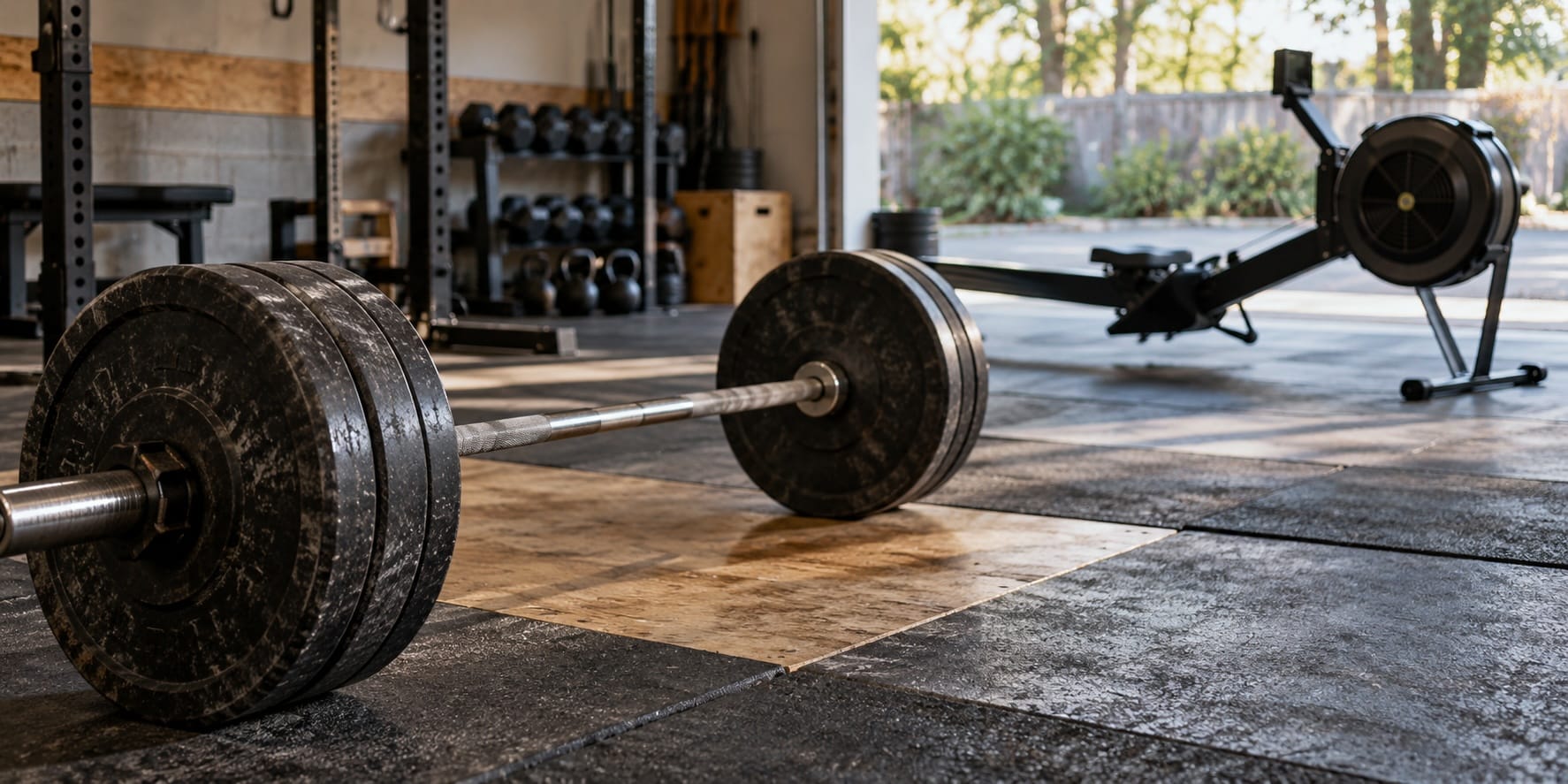
I like a maximal 2K Concept2 row. Important nerd note: a 2K does not directly measure VO₂max. You need gas-exchange testing for that. But it is cheap, repeatable, horrifyingly objective and gives you a useful benchmark.
Test. Train. Retest.
Now you’ve got data instead of staring at your Garmin during rear-delt flies trying to read your mitochondrial horoscope.
Want the full nerd chute on aerobic development, VO₂max, testing and how to do cardio without murdering your lifting?
Explore Flexible Meathead Cardio
Your lifting is already helping your cardiovascular system. Just don’t expect one tool to do every damn job in the garage.